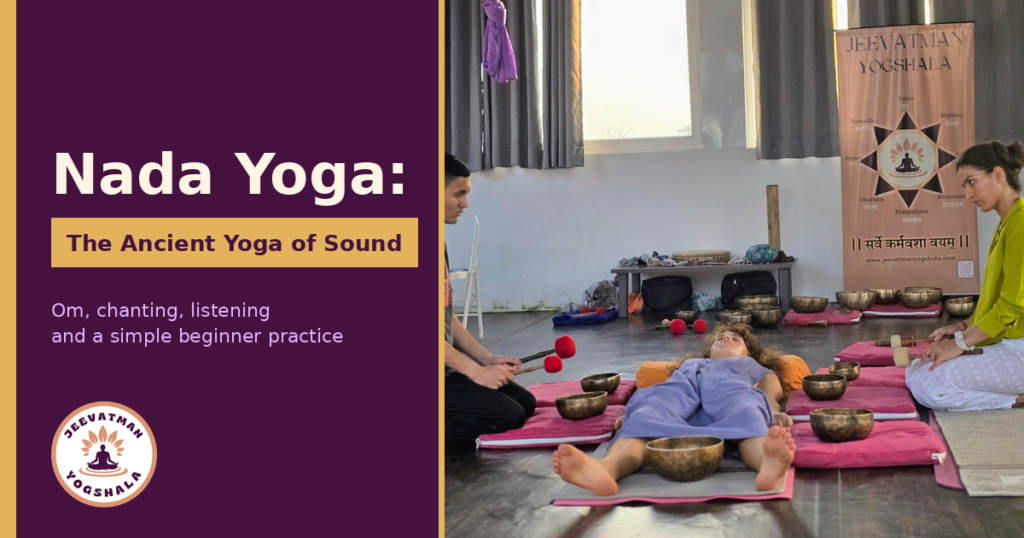
Quick Answer: Nada Yoga is the traditional yoga of sound. The Sanskrit word nada means sound or vibration, and the practice uses chanting, humming, music and attentive listening to focus the mind and move toward stillness. It includes outer sound you can hear, such as the voice or a bowl, and inner sound that practitioners describe hearing in deep silence. Nada Yoga is a meditative practice, not a medical treatment. Beginners can start with simple Om chanting or humming and mindful listening, ideally learning from an experienced teacher.
You may have come across the phrase while reading about sound baths, mantra or meditation, and wondered what it means and whether it differs from sound healing. The word gets used in many ways, which makes the topic feel more mysterious than it needs to be.
This guide explains Nada Yoga in plain language: what it is, where it comes from, the main practices, a simple routine for beginners, what the research does and does not show, and how it differs from sound healing. It is general information, not medical advice.
Important Distinction: Nada Yoga and sound healing are related but not identical. Nada Yoga is a path of attention, in which you actively listen, chant or hum to quiet the mind. Sound healing usually means receiving sound, such as a bowl or gong session, to support relaxation. Many people enjoy both.
What Is Nada Yoga?
In Sanskrit, nada means sound, vibration or flow, and yoga means union or discipline. Nada Yoga is therefore the discipline of working with sound to steady the mind and deepen meditation. It is often called the yoga of sound.
The core idea is simple. The mind follows what it listens to. By giving it a single, steady sound to follow, whether a chant, a hum or the fading tone of a bowl, practitioners aim to reduce mental chatter and rest in a quieter state of awareness.
If you are new to working with sound, our guide on what sound healing is and how it works gives helpful background.
Where Does Nada Yoga Come From?
Sound has long been central to Indian spiritual traditions. The idea of Nada Brahma, often translated as the world is sound, describes sound and vibration as the basis of existence. Classical yoga texts, including the Hatha Yoga Pradipika and the Nada Bindu Upanishad, discuss practices of attending to sound, including the listening to inner sounds that arise in deep meditation.
Traditions and teachers differ in how they describe these practices, so it is best to treat any single account as one view. If you would like to go deeper, studying with a teacher who has trained in the tradition is the most reliable route.
Our article on awakening the Om within through sound healing in Rishikesh explores the sacred sound of Om, which sits at the heart of many of these practices.
Two Kinds of Sound in Nada Yoga
| Type of Sound | Meaning | Examples |
|---|---|---|
| Ahata nada (struck sound) | Sound made by an action that you can hear | The voice, chanting, singing bowls, gongs, bells, drums, tanpura |
| Anahata nada (unstruck sound) | Subtle or inner sound described in deep stillness | Inner humming, ringing or tonal sounds described in meditation |
Beginners almost always start with struck sound, because it is easy to hear and to follow. Inner sound is generally described as something that may arise with steady practice. It is not something to chase or force, and some people never experience it. Do not be discouraged if you do not.
Important Distinction: Some people experience ringing or other sounds in their ears that are caused by a medical condition such as tinnitus. These are not the same as the inner sounds described in the yoga texts. If you notice persistent ringing, speak to a doctor.
Main Nada Yoga Practices
| Practice | What It Involves | Good to Know |
|---|---|---|
| Om chanting | Repeating Om slowly and feeling the vibration in the body | Keep the voice relaxed; the sound need not be loud |
| Humming (Bhramari-style) | A gentle, steady hum on the out-breath | Go softly; avoid pressing on your ears and stop if uncomfortable |
| Mantra repetition | Repeating a chosen word or phrase aloud or silently | Choose one with a teacher if you can |
| Listening to instruments | Following the tone of a bowl, gong, bell or tanpura as it fades | See our singing bowls guide for how to begin |
| Kirtan or group chanting | Call-and-response singing with others | A supportive way to chant if you enjoy singing |
| Silent inner listening | Resting attention on subtle sounds in stillness | Usually practised after the outer methods feel familiar |
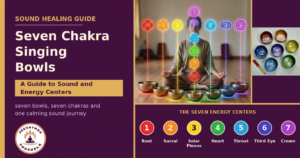
Our Tibetan singing bowls guide and sound bath meditation guide explain two of the easiest ways to practise listening.
How to Practise Nada Yoga: A Simple 10-Minute Routine
This is a general beginner routine, not a prescription. Adjust it to suit you, and stop if anything feels uncomfortable.
- Settle (1 minute): sit comfortably with a long spine and close your eyes, or lower your gaze. Take a few slow breaths.
- Om chanting (3 minutes): breathe in, then chant Om on the out-breath at a comfortable pitch. Repeat for several rounds, feeling the vibration in your chest and head.
- Humming (2 minutes): hum softly on each out-breath and notice the vibration around your face and chest.
- Listen (3 minutes): ring a bowl or play a single soft tone, and follow the sound until it fades. Then listen to the silence that follows.
- Rest (1 minute): sit quietly and notice how you feel before opening your eyes.
Practical Tip: Practise at roughly the same time each day, even for just five minutes. A short, regular practice usually helps more than one long session, and early morning or the end of the day often feel quietest.
Possible Benefits of Nada Yoga
People often turn to Nada Yoga for a sense of calm, better focus and a gentler way to meditate. Research on chanting, humming and sound-based meditation is still early and mixed, so claims should be modest. The National Center for Complementary and Integrative Health notes that meditation practices usually have few risks and describes mixed evidence for different approaches, while some mindfulness practices may help with insomnia and sleep quality. It also notes that few studies have looked for harms.
- Relaxation: slow, vocal exhalation can feel soothing.
- Focus: following one sound gives a busy mind an anchor.
- Emotional ease: many people feel lighter after chanting or listening.
- Connection: group chanting can build a sense of community.
Key Takeaway: Treat Nada Yoga as a meditative practice you can enjoy, not as a treatment. It may support calm and focus, but it does not replace medical or mental health care.
If sleep is your main reason for exploring sound, see our guides on sound healing for sleep and insomnia and yoga for mental health.
Nada Yoga vs Sound Healing: What Is the Difference?
| Point of Comparison | Nada Yoga | Sound Healing |
|---|---|---|
| Main focus | Active practice of listening, chanting or humming to steady the mind | Receiving sound, often from a practitioner, to support relaxation |
| Your role | Participant who produces or follows the sound | Often a listener or recipient, though not always |
| Typical tools | Voice, Om, mantra, instruments, inner listening | Singing bowls, gongs, chimes, tuning forks, voice |
| Roots | Traditional yoga texts and practice | A modern wellbeing practice that draws on many traditions |
| Goal | Stillness, focus and deeper meditation | Relaxation and a sense of wellbeing |
You can read more about the practitioner side in our guides on the harmonious journey of sound healing and the benefits of a sound healing teacher training course.
Nada Yoga and Frequencies: A Word of Caution
You may see claims that certain frequencies or notes heal specific conditions. These are popular online, but strong scientific evidence is lacking. Our solfeggio frequencies chart explains the tones people talk about, and it is best treated as background, not as proof of healing.
Who Should Take Extra Care?
Nada Yoga is usually gentle, but not everyone finds sound or meditation comfortable. Speak to a doctor or qualified teacher first, and take it slowly, if you:
- have tinnitus, hearing sensitivity or an ear condition
- find loud or sustained sound distressing
- are managing a mental health condition, trauma or anxiety, since meditation can sometimes bring up difficult feelings
- feel dizzy, lightheaded or unwell while chanting or breathing slowly
Keep the volume low, never force the voice or the breath, and stop if you feel uncomfortable. The NCCIH notes that some people do have negative experiences with meditation, so go at your own pace.
Common Mistakes to Avoid
Watch out for these frequent errors:
- Straining the voice or chanting too loudly
- Expecting to hear inner sounds quickly
- Treating Nada Yoga as a cure for any condition
- Practising for a long time on the first day
- Following online claims about specific healing frequencies without evidence
- Skipping guidance when trying advanced practices
Learning Nada Yoga: Where to Start
Start simply with Om chanting, humming and mindful listening, and consider learning with an experienced teacher who can guide your voice, posture and pace. If you are interested in sound practices as a path to teaching, see our guide on how to become a sound healer and our sound healing course in Rishikesh. Many yoga teacher trainings also include mantra and meditation, so check each syllabus to see what is covered, including in our 200-hour yoga teacher training.
Sound practices are sometimes taught alongside teachings on energy and the chakras. For one perspective, read our guide to Kundalini awakening and yoga.
Frequently Asked Questions
What is Nada Yoga?
Is Nada Yoga the same as sound healing?
How do I practise Nada Yoga at home?
What are the benefits of Nada Yoga?
What is Anahata nada?
Is Om chanting part of Nada Yoga?
Can beginners practise Nada Yoga?
Do I need a teacher for Nada Yoga?
Who should be careful with Nada Yoga?
Key Takeaway
Nada Yoga is the ancient yoga of sound: a meditative practice that uses chanting, humming, instruments and attentive listening to steady the mind. Start simply with Om, a soft hum and mindful listening, practise regularly and gently, keep your expectations modest, and learn from an experienced teacher when you can. It may support calm and focus, but it is not a treatment for any condition.
Curious About Exploring Sound Practices?
If you would like to learn more about sound in a structured way, you are welcome to review the course details and ask any questions about what the training covers. Take your time and choose what fits your goals.
Explore the Sound Healing CourseThis article is general information, not medical advice. Nada Yoga is a meditative practice and not a treatment for any condition. If you have hearing problems, persistent ringing in the ears, a mental health condition or other health concerns, please speak to a qualified healthcare professional before starting a new practice.