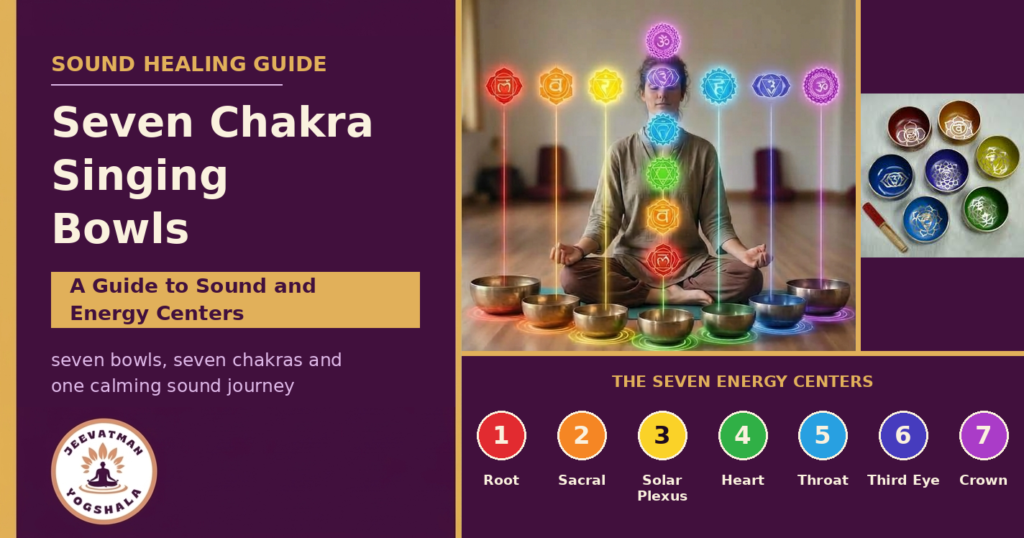
Quick Answer: Chakra singing bowls are a set of seven singing bowls, each paired with one of the body's seven traditional energy centres, or chakras. Most sets match the notes C, D, E, F, G, A and B to the root, sacral, solar plexus, heart, throat, third eye and crown chakras, although systems vary. You play the bowls one at a time, usually from root to crown, to guide a calming sound meditation. Chakras are a traditional yogic concept, and there is no scientific proof that bowls tune them. Research suggests singing bowl meditation may help people feel calmer, but chakra singing bowls are a relaxation practice, not a medical treatment.
If you have started looking into sound healing, you have probably seen sets of chakra singing bowls described with bright colours, specific notes and big promises. It is hard to tell which parts come from traditional yoga, which are modern conventions and which are simply marketing.
This guide explains chakra singing bowls in plain language: what the seven chakras are, how each bowl is matched to a chakra, how to use a set, what the research does and does not show, and how to choose a set sensibly. It is general information, not medical advice.
Important Distinction: Chakras come from yogic and tantric traditions, where they are described as energy centres along the spine. They are not physical structures that can be found by scientists, and the pairing of notes with chakras is a modern convention that differs between teachers. Many people find the framework a helpful focus for meditation, and you can enjoy it without treating it as proven fact.
What Are Chakra Singing Bowls?
Chakra singing bowls are singing bowls grouped in a set of seven, each chosen to match one chakra. Traditionally made singing bowls are metal bowls that produce a sustained, resonant tone when struck with a mallet or when the rim is circled with a wooden striker. Chakra bowl sets are a modern arrangement in which the seven bowls are tuned to a sequence of notes.
If you are new to the instruments themselves, our Tibetan singing bowls guide covers the types, benefits and how to play one, and our guide on what sound healing is and how it works gives helpful background.
What Are the Seven Chakras?
In yogic teaching, a chakra is described as a wheel or centre of energy. Seven are commonly listed, running from the base of the spine to the crown of the head. Each has a Sanskrit name, a colour, a seed sound called a bija mantra, and a set of themes people associate with it.
| Chakra | Sanskrit Name | Colour | Commonly Paired Note | Seed Sound | Themes Often Linked |
|---|---|---|---|---|---|
| Root | Muladhara | Red | C | LAM | Stability, safety, grounding |
| Sacral | Svadhisthana | Orange | D | VAM | Creativity, emotions, pleasure |
| Solar Plexus | Manipura | Yellow | E | RAM | Confidence, willpower |
| Heart | Anahata | Green | F | YAM | Love, compassion, connection |
| Throat | Vishuddha | Blue | G | HAM | Expression, communication |
| Third Eye | Ajna | Indigo | A | OM | Intuition, insight |
| Crown | Sahasrara | Violet or white | B | Silence or OM | Awareness, connection |
These pairings are traditions and conventions, not measurements. Different teachers, books and bowl makers use slightly different notes, colours and themes, so treat the table as a common starting point.
You can read more about the colour side of this system in our guide to aura colours and their meaning, and about the energy side in our article on Kundalini awakening and yoga.
How Chakra Singing Bowls Are Matched to the Chakras
Most chakra singing bowl sets assign one note to each chakra, starting with C for the root and moving up the scale to B for the crown. Some practitioners also match the bowl to the chakra's colour or seed sound, and some simply choose by ear, picking the tone that feels right for a given area.
Frequencies are another popular theme, but strong evidence that particular frequencies treat particular conditions is lacking. See our solfeggio frequencies chart for the tones people talk about, and keep a healthy sense of curiosity rather than certainty.
How Chakra Singing Bowls May Work
There is no established scientific mechanism by which a bowl tunes a chakra. What we can say is that listening closely to a sustained sound can give the mind something gentle to follow, encourage slower breathing and create a calm, ritual-like setting. Those effects alone can feel deeply restful.
Research on singing bowls is small and still developing. In one observational study of 62 adults, participants reported feeling less tension, anger, fatigue and depressed mood after a roughly one-hour singing bowl sound meditation. The study had no control group and did not test chakra-specific effects, so it cannot show that the bowls caused the changes or that each bowl affects its own chakra.
Key Takeaway: Chakra singing bowls may help you relax and focus, but the research does not show that a bowl tunes a chakra. Enjoy them as a calming practice and avoid anyone who promises to cure or unblock anything.
For a gentle first experience of this kind of practice, see our sound bath meditation guide and our article on sound healing for sleep and insomnia.
The Seven Chakra Singing Bowls, One by One
1. Root Chakra Bowl (Muladhara)
Usually paired with the note C and the colour red, the root bowl is the lowest and deepest in the set. People often use it to start a session, with the intention of feeling grounded and stable. Its tone tends to be low and slow.
2. Sacral Chakra Bowl (Svadhisthana)
Often paired with D and orange, the sacral bowl is linked to creativity, emotion and flow. Many players like to follow the root bowl with this one, letting the sound feel a little lighter and more fluid.
3. Solar Plexus Chakra Bowl (Manipura)
Commonly paired with E and yellow, the solar plexus bowl is associated with confidence and personal power. It sits at the middle of the body's centre, and its tone often feels bright and warm.
4. Heart Chakra Bowl (Anahata)
Typically paired with F and green, the heart bowl is linked to love, compassion and connection. In the yoga of sound, anahata also means unstruck sound, a link you can explore in our guide to Nada Yoga, the ancient yoga of sound.
5. Throat Chakra Bowl (Vishuddha)
Usually paired with G and blue, the throat bowl is associated with expression and communication. Some people hum or chant softly along with it, which can be a natural way to connect voice and sound.
6. Third Eye Chakra Bowl (Ajna)
Often paired with A and indigo, the third eye bowl is linked to intuition and insight. It is a good moment in a session to slow the pace and let silence between tones grow longer.
7. Crown Chakra Bowl (Sahasrara)
Commonly paired with B and violet or white, the crown bowl is the highest in the set and is associated with awareness and a sense of connection. Many sessions end here, followed by a minute or two of silence.
Chakra Singing Bowl Sets: Types and Materials
| Type | What It Is | Things to Consider |
|---|---|---|
| Metal (Himalayan-style) bowls | Hand-hammered or cast bowls made from metal alloys | Rich, complex tones; vary widely in quality and tuning |
| Crystal bowls | Bowls made from quartz or similar crystal | Clear, pure tones; fragile and need careful handling |
| Tuned chakra sets | Seven bowls chosen to match a note sequence | Check the notes; sets sold as chakra bowls are not all precisely tuned |
Our guide to Tibetan singing bowls goes into types and how to play them in more detail.
How to Choose a Set of Chakra Singing Bowls
- Listen first: choose tones you find pleasant and calming, not just a matching colour.
- Ask about the notes: check what note each bowl is meant to produce and how it was tuned.
- Check the quality: look for even tone, a clean sustain and no cracks, and buy from a reputable seller.
- Think about size and weight: larger bowls sound deeper but are heavier to handle.
- Include the extras: a mallet, striker and cushion for each bowl make a big difference.
- Be wary of big claims: a set cannot guarantee healing or unblocked chakras.
You do not need a full set to begin. Many people start with one bowl and add others over time.
How to Use Chakra Singing Bowls: A Simple 15-Minute Session
This is a general beginner routine. Adjust it to suit you, and stop if anything feels uncomfortable.
- Prepare (2 minutes): sit or lie down comfortably in a quiet space, with a cushion or blanket if you like. Take a few slow breaths.
- Play from root to crown (9 minutes): strike or circle each bowl gently, starting with the root bowl and moving up. Spend roughly a minute on each, listening as the sound fades before moving on.
- Rest (3 minutes): let the final tone fade, and rest in silence, noticing how you feel.
- Close (1 minute): take a few deeper breaths and open your eyes slowly.
Practical Tip: Keep the volume gentle and leave pauses between bowls. The silence between tones is part of the practice, and it is easy to overdo the sound.
Chakra bowls can also be combined with chanting and meditation. See our guide on awakening the Om within through sound healing for one approach.
Who Should Take Extra Care
Sound practices are usually gentle, but not everyone finds them comfortable. Speak to a doctor or qualified practitioner first, and go slowly, if you:
- have tinnitus, hearing sensitivity or an ear condition
- have a pacemaker or another implanted medical device, or are pregnant, since some practitioners place bowls on or near the body
- are managing a mental health condition, trauma or anxiety, as meditation can sometimes bring up difficult feelings
- feel dizzy, uncomfortable or unwell during or after a session
The National Center for Complementary and Integrative Health notes that meditation usually carries few risks but that some people have negative experiences, so go at your own pace. If you are unsure, keep the bowls off the body and the volume low.
Common Mistakes to Avoid
Watch out for these frequent errors:
- Believing a bowl can unblock, cure or heal a chakra
- Buying a set because of its colours, without listening to the tones
- Playing too loudly or too quickly
- Placing bowls on the body without checking suitability
- Skipping the silence between tones
- Expecting a particular experience instead of simply listening
For Practitioners: Using Chakra Singing Bowls Responsibly
If you offer sessions, describe them as relaxation and wellbeing practices, avoid promising to cure or treat conditions, and be clear about what the chakra framework is. Our guides on how to become a sound healer, how to start a sound healing business and the benefits of a sound healing teacher training course cover training and professional practice, and you can explore our sound healing course in Rishikesh.
Frequently Asked Questions
What are chakra singing bowls?
How do chakra singing bowls work?
Which singing bowl is for which chakra?
Do chakra singing bowls really work?
How do I use a set of chakra singing bowls?
Do I need all seven bowls to start?
How do I choose chakra singing bowls?
Are chakra singing bowls safe?
Are chakras scientifically proven?
Key Takeaway
Seven chakra singing bowls pair each traditional energy centre with a note and a colour, offering a structured way to enjoy a sound meditation from root to crown. The pairings are conventions rather than proven science, and the research suggests singing bowls may help you feel calmer, not that they tune chakras. Choose tones you love, play gently, take care if you have hearing or health concerns, and enjoy the practice for what it is.
Curious About Sound Healing Training?
If you would like to learn more about working with singing bowls in a structured way, you are welcome to review the course details and ask any questions about what the training covers. Take your time and choose what fits your goals.
Explore the Sound Healing CourseThis article is general information, not medical advice. Chakra singing bowls are a relaxation and wellbeing practice and not a treatment for any condition. If you have hearing problems, an implanted device, are pregnant, or have a health or mental health concern, please speak to a qualified healthcare professional before trying a new practice.