How to Become a Sound Healer
To become a sound healer, you build four things in order — your own listening practice, basic sound theory, hands-on skill with one or two instruments (usually singing bowls first), and supervised session facilitation. Most people move through a short sound healing training, then a longer sound healing course, then months of practice before working professionally. There’s no universal sound healing certification body — a certificate documents training completed, not automatic skill.
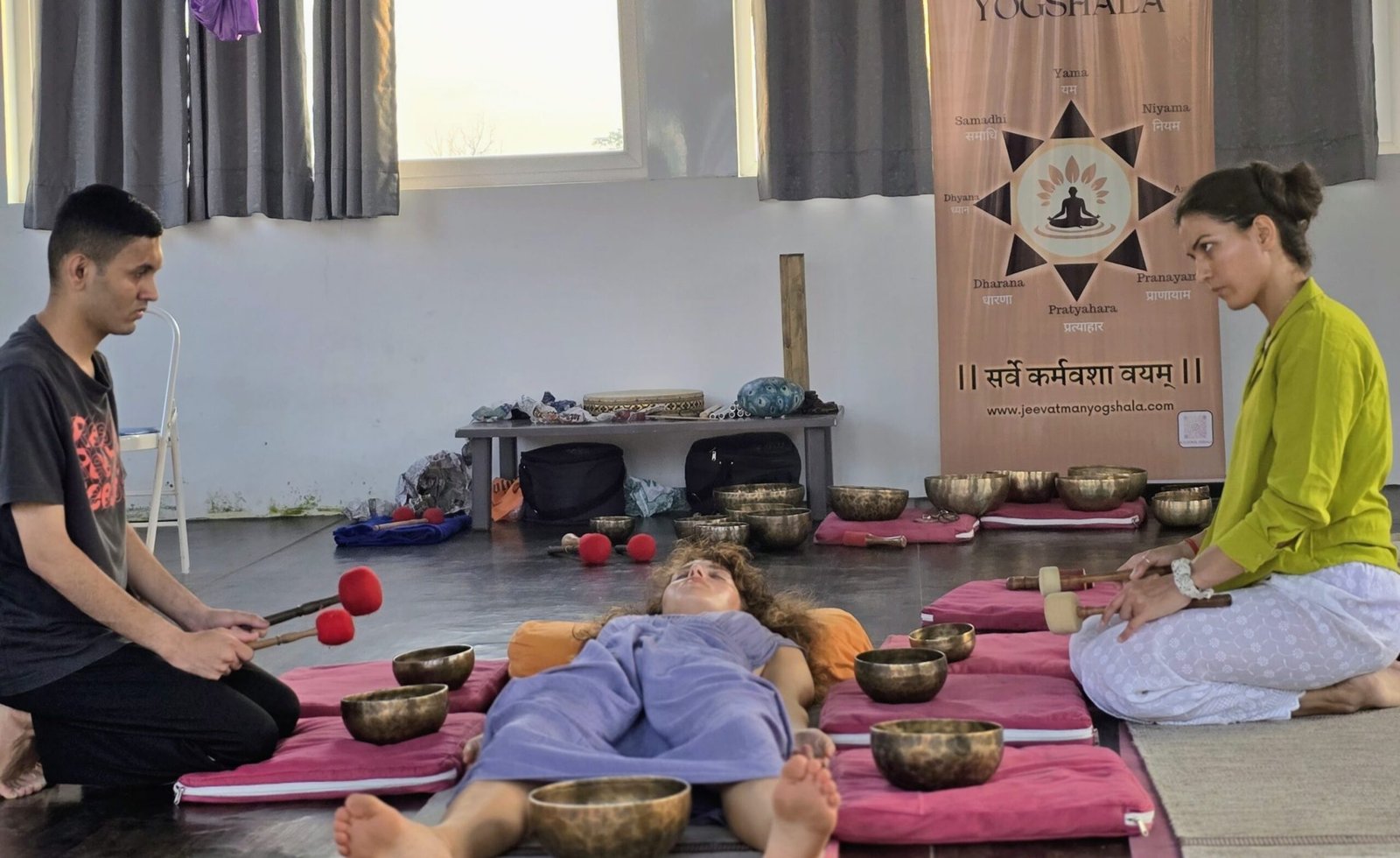
I get some version of this question almost every week usually from someone standing in our sound room in Jonk Village, holding a mallet for the first time, asking how can they actually become a sound healer.
Here’s the honest, short version: you don’t become a sound healer by owning instruments or finishing a course. You become one by learning to listen first to a single bowl, then to a room full of strangers — and by being willing to stay a beginner at that for longer than feels comfortable. Everything else in this guide is really just detail underneath that one idea.
Steps to Become a Sound Healer
- Understand what sound healing is and isn’t — a wellness and contemplative practice, not a medical treatment.
- Develop your own relationship with sound before facilitating for anyone else.
- Learn the fundamentals of sound — frequency, amplitude, resonance, harmonics, timbre.
- Study the yogic/traditional framework — Nāda, mantra, Om, Nada Yoga — especially if training in India.
- Learn instruments progressively, starting with singing bowls, then gong, handpan, chimes, voice.
- Learn facilitation, not just playing — when to introduce sound, when to leave silence.
- Learn to structure a full session — arrival, grounding, opening, deepening, dissolution, integration.
- Practice with individuals and groups separately — the skills aren’t interchangeable.
- Learn to hold space and know your professional limits.
- Understand safety and contraindications before working with real participants.
- Practice extensively before charging — friends, then small groups, with feedback.
- Choose a training program based on practical hours, not just certificate design.
What does a sound healer actually do?
The instrument list looks impressive — bowls, gongs, handpans, tuning forks, your own voice. But the job of a sound healer isn’t playing them. It’s knowing whether a room needs more sound right now, less, or none at all.
A practitioner may offer:
- individual sound sessions
- group sound baths
- sound meditation
- yoga and sound sessions
- meditation retreats
- wellness workshops
- corporate or community sessions
- sound-based practices integrated into other wellness work
The role is not simply to “play beautiful sounds.” A practitioner needs to understand how to create and hold an experience — knowing when to introduce sound, how much to use, when to change instruments, when to slow down, and when silence is more appropriate than another sound. This is why professional sound healing training should go beyond instrument demonstrations.
Is Sound Healing Backed by Science?
Some. Not as much as the internet claims.
A 2025 review of 19 clinical studies found real potential for anxiety, sleep, and mood — and said clearly the evidence base is still thin.
A responsible practitioner says: “This practice may support relaxation and wellbeing.” Not: “This frequency will cure your illness.”
That distinction is the difference between a wellness practice and an unsupported medical claim — and it’s the first thing a good training should teach you to hold.
Why train as a sound healer in Rishikesh?
At a residential yoga school, food is freshly prepared on-site, vegetarian (sattvic), and generally very safe – far lower risk than eating at random street stalls as a new visitor.
Sound has a long history within Indian spiritual traditions. Central concepts include:
- Nāda — sound, or inner sound
- Śabda, Ahata Nāda, Anāhata Nāda
- Mantra, Om/Pranava, Bīja mantra
- Chanting, attentive listening, silence
Nada Yoga explores sound as a means of cultivating awareness. Modern sound healing and traditional Nada Yoga aren’t identical, but studying them together creates a genuine meeting point between sound, yoga, meditation, and awareness. It’s the main reason people travel to Jeevatman Yogshala in Rishikesh specifically for sound healing training rather than taking an online course.
Which instruments should you learn first?
Don’t buy one of everything. Go deep on two or three before widening out.
| Instrument | Best For | Learning Focus |
|---|---|---|
| Tibetan singing bowls | Meditation, 1:1 sessions, sound baths, yoga transitions | Striking, rim playing, mallet choice, pressure, sustain |
| Gong | Layered, changing sound fields | Mallet selection, striking zones, dynamics, restraint |
| Handpan | Melody, rhythm, opening/closing sessions | Basic rhythmic role within a session |
Chimes | Delicate transitions, spaciousness | Subtlety, timing |
Tingsha | Clear beginnings/endings | Traditional Tibetan Buddhist use |
Rainstick, drum, percussion | Texture and rhythm | Broadening the soundscape |
| Voice | Humming, toning, mantra, chanting | Conscious, breath-supported use — no singing talent required |
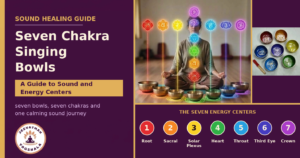
Singing bowls are the standard starting instrument in almost every sound healing course, because the skill carries into everything else. Our own set runs a third-octave scale, C at 128Hz through B at 240Hz — and I remember exactly how long it took me to stop reaching for the loudest tone in the room and start trusting a quiet one.
How to Facilitate — Not Just Play
The instruments are identical. The experience isn’t. This is the line a sound healing training needs to teach: facilitation, not just technique.
This is where short sound healing courses tend to stop, and where the real training begins. A full session generally has a shape – arrival → grounding → orientation → opening sound → deepening → immersion → dissolution → silence → integration. None of that is about cramming in as many instruments as possible. If anything, that instinct is the first thing good sound healing training should unlearn in you.
One-on-one work and group sound baths aren’t the same skill either, even though they look related. A private session is about the one person in front of you. A group sound bath is about a whole room’s nervous systems at once. Ten people is not one person’s session, repeated ten times.
Individual Sessions vs. Group Sound Baths
These require different skills.
- One-to-one sessions demand attention to why the person came, their comfort, sensory sensitivity, positioning, volume, instrument choice, and feedback.
- Group sound baths demand attention to room acoustics, participant count, volume calibration across a room, pacing, opening instructions, and group energy. A sound bath for ten people is not a one-to-one session multiplied by ten.
What a sound healer is actually responsible for
People bring real things into a session — grief, exhaustion, sometimes something they haven’t said out loud yet. You’re not there to diagnose any of it. You’re there to make the space safe enough that it can settle for an hour. That means clear boundaries, no promised outcomes, and knowing exactly where your role ends. A sound healer should know the limits of their role.
Safety matters here too. Sound is generally relaxing, but not everyone responds the same way. A responsible practitioner considers volume, hearing sensitivity, migraines, sensory sensitivity, emotional vulnerability, pregnancy where relevant, medical devices or conditions where relevant, and psychological safety. If a participant has a medical condition, encourage them to consult a healthcare professional rather than making that judgment yourself. The more powerful the instrument, the more this matters.
Rishikesh offers temples, ghats,hikes, waterfalls, cafes, and the Ganga itself – all within walking distance or a short ride from most schools in the Ram Jhula area.
Wellness Practice vs. Medical Treatment — Where's the Line?
You can describe your work as supporting relaxation, meditation, self-awareness, wellbeing, stress management, and contemplative practice.
Be careful claiming sound healing cures disease, removes medical conditions, replaces medication, repairs organs, treats cancer, guarantees trauma release, or balances a health condition through a specific frequency. These claims aren’t appropriate just because they’re common online. The 2025 systematic review found promising potential and the need for better evidence — a practitioner who respects that limit is more trustworthy, not less.
Practice Before You Charge
A common mistake: short course → certificate → instruments purchased → immediately charging for sessions.
Instead: practice on yourself, then friends, then small groups. Ask for feedback. Record yourself if appropriate. Ask honestly — was the volume comfortable? Did I leave enough silence? Did I rush? Too many instruments? Did the session have an arc? Was everything explained clearly? Did I actually listen?
You’re not chasing perfection — you’re building the intentionality that only comes from doing it badly a few times first.
How to Choose a Sound Healing Course
Rishikesh and other locations now offer sound healing courses ranging from one-day foundations to multi-week practitioner trainings, varying considerably in depth. Choose based on substance, not certificate design. Ask:
- How much practical instrument training is included?
- Will I practice facilitating a complete session myself?
- Will I learn both individual and group formats?
- Is the curriculum broader than singing bowls (theory, listening, voice, meditation)?
- Are safety and professional boundaries taught?
- What is the instructor’s actual practical experience?
- How much individual feedback will I receive?
- What does the certification actually represent?
- Can I speak to previous students?
If a school can’t answer these clearly, take your time before enrolling.
Do you need a certification to become a sound healer?
There’s no single global license for this work. A sound healing certification documents training completed — actual competence comes from what you do with it afterward. Worth checking exactly what a specific certificate represents before you enroll in any sound healing course.
At Jeevatman, our sound healing training is issued as a YACEP certificate — Yoga Alliance’s continuing education credential — so the hours you complete here count toward your existing Yoga Alliance registration as well.
Can Yoga Teachers Become Sound Healers?
Yes — and yoga teachers often have a natural entry point, since they already understand breath, awareness, meditation, body positioning, relaxation, sequencing, and group facilitation. Sound becomes another dimension of existing teaching:
- Yoga → Sound: transition from movement into sound meditation
- Pranayama → Sound: breath awareness before vocal toning or instruments
- Yoga Nidra → Sound: carefully selected sound within a longer relaxation
- Meditation → Sound: a bowl, mantra, or other sound as an anchor for attention
- Retreats → Sound Bath: a dedicated evening session
This is why sound healing training is a common continuing-education pathway for yoga teachers.
What a Good Sound Healing Training Should Include
- Sound foundations: frequency, vibration, resonance, harmonics, listening
- Traditional knowledge: Nada Yoga, mantra, Om, the Indian understanding of sound
- Instruments: singing bowls, gong, handpan, chimes, percussion, voice
- Practical technique: striking, rimming, dynamics, sequencing, combinations
- Meditation: sound meditation, breath awareness, guided relaxation
- Facilitation: individual sessions, group sound baths, session design, integration
- Professional skills: communication, boundaries, consent, safety, ethics
- Practical experience: demonstrations, supervised practice, peer sessions, feedback
A course of lectures and a certificate alone may leave you informed but not confident.
The Jeevatman Approach to Sound Healing Training
At Jeevatman Yogshala in Rishikesh, sound healing training combines sound, practical instrument work, and experiential learning — not instrument demonstrations followed by a certificate.
Program | Best For |
1-Day Introduction | Experiencing the foundations before committing further |
3-Day Training | A deeper introduction to instruments, sound practices, and basic facilitation |
5-Day Training | Intensive practical learning; a stronger foundation for integrating sound into existing wellness or yoga work |
7-Day Training | Immersive, practitioner-oriented: deeper instrument work, sound meditation, and facilitation |
Choose by what you actually want to do with sound — not by the longest available course. Curious? Start with the foundation. Already teaching yoga, meditation, or wellness? A more intensive program likely makes more sense. Planning to facilitate professionally? Prioritize hands-on practice and supervised experience over program length.
Frequently Asked Questions
How long does it take to become a sound healer?
There's no fixed number. Basic bowl technique can be learned in a short sound healing training, but real facilitation confidence builds through practice, feedback, and time — usually months, not days.
Do I need to be musical to become a sound healer?
Not really. Becoming a sound healer leans on listening and facilitation far more than musical performance.
Can sound healing treat medical conditions?
No. It's a wellness practice, not a substitute for diagnosis or medical treatment, regardless of what individual sound healing courses may claim. nesciunt you probably have not heard of them accusamus labore sustainable VHS.
Is Rishikesh a good place for sound healing training?
Genuinely yes, if you want sound alongside yoga and meditation rather than as an isolated skill picked up in a weekend workshop elsewhere.
Can yoga teachers integrate sound healing into their classes?
Yes. Sound can complement yoga, pranayama, meditation, and Yoga Nidra when used appropriately, provided the teacher understands the techniques, safety considerations, and professional boundaries involved.
Ready For Rishikesh ?
Sound Healing Training at Jeevatman Yogshala, Jonk Village, Ram Jhula
• Airport pickup available • Yoga Alliance certified • Small batches