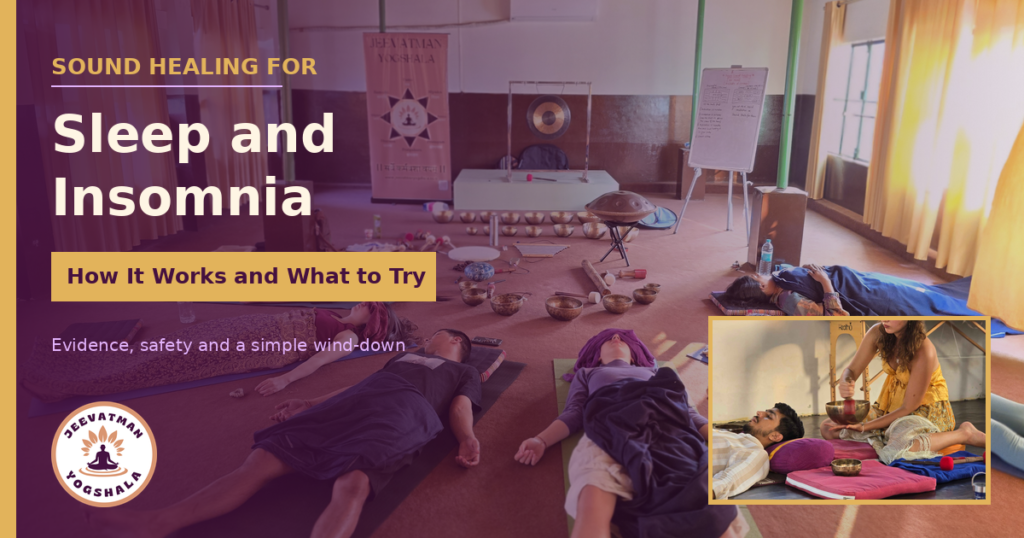
Quick Answer: Sound healing may help some people relax and wind down before bed, which can support a calmer evening and better sleep habits. But the evidence that it treats insomnia is limited, and it is not a medical treatment. If you want to try it, use soft, steady sounds at a low volume as part of a regular bedtime routine, keep other sleep habits in place, and see a doctor if sleep problems continue.
Lying awake at night, watching the clock and wondering why sleep will not come, is exhausting. When people look for gentler ways to unwind, sound healing often comes up: the slow ring of a singing bowl, a long sound bath, or a calm recording to fall asleep to. It sounds soothing, but does it actually help?
This guide explains sound healing for sleep in plain language: how it may work, what the research does and does not show, what you can try at home, who should take extra care, and when it is time to speak to a doctor. It is general information, not medical advice.
Important Distinction: Insomnia is a recognised sleep problem, and sometimes a sign of another health issue. Sound healing is a relaxation and wellbeing practice. It should not replace medical advice or treatment, and no one should promise that it cures insomnia.
What Is Insomnia, and What Causes It?
Insomnia means regularly having trouble sleeping: finding it hard to fall asleep, waking often in the night, waking too early, or still feeling tired after a night in bed. The NHS overview of insomnia lists common causes such as stress, anxiety, noise, a room that is too hot or cold, and caffeine or alcohol.
That matters, because sound healing mainly touches one part of the picture: how relaxed and settled you feel when you get into bed. It does not address every cause, so it works best as one piece of a wider routine.
How Sound Healing Might Support Sleep
Sound healing generally uses instruments such as singing bowls, gongs, chimes and the voice to create slow, repeating sounds. Here are the ways people think it may help, which are possible explanations rather than proven mechanisms:
- A focus for the mind: listening closely to a sustained sound can give a busy mind something gentle to follow.
- A slower pace: long, soft tones can encourage slower breathing and a sense of settling.
- A calming cue: a repeated evening ritual can signal to your body that the day is ending.
- A quieter atmosphere: dim light, a comfortable position and a soft soundscape can make it easier to let go of tension.
If you are new to the practice, our guide on what sound healing is and how it works covers the basics, and our sound bath meditation guide explains what a first session feels like.
What the Evidence Says
Be wary of big promises. Research on sound-based practices for sleep is limited and mixed, and the studies are often small. In its overview of complementary approaches for sleep disorders, the US National Center for Complementary and Integrative Health describes the evidence for many approaches as inconsistent or too limited to draw firm conclusions, while noting that relaxation techniques may help some people with insomnia and night-time anxiety, particularly alongside good sleep habits.
Key Takeaway: Calming, relaxation-based practices may help you wind down, but there is not enough strong evidence to say sound healing treats insomnia. Treat it as a gentle support, and judge it by how you feel, not by a promise.
You may also see claims that certain "healing frequencies" improve sleep. These are popular online, but strong evidence is lacking. Our solfeggio frequencies chart explains the tones people talk about, and it is best read as background rather than proof.
What to Try: Simple Ways to Use Sound for Sleep
| Option | What It Involves | Things to Consider |
|---|
| Singing bowl at low volume | One soft, sustained tone played gently in the evening | Keep it quiet; see our Tibetan singing bowls guide for how to play one |
| Recorded sound bath or ambient audio | A calm recording played at low volume before or at bedtime | Choose soft, steady sound with no sudden changes; use a timer so it stops |
| Humming or gentle chanting | Slow, relaxed humming on the out-breath | Free and simple; keep it comfortable, not forced |
| Guided breath with soft sound | A few minutes of slow breathing while listening to one tone | Pairs easily with a short wind-down routine |
| Evening group sound bath | A session in a calm setting led by a trained practitioner | Ask about the format, volume and what to bring; not suitable for everyone |
Many people also like a short, gentle yoga or breathing practice beforehand. Try our guide to yoga for sleep: 7 poses to do before bed, and see our guides on yoga for mental health and easy yoga poses and meditation tips for stress relief offer gentle starting points.
A Simple 20-Minute Wind-Down Routine
This is a general suggestion, not a prescription. Adjust it to suit you.
- Dim the lights and put screens away about 20 minutes before bed.
- Get comfortable lying down or reclined, with a blanket if you feel cool.
- Start your sound at a low volume: a single bowl tone, a calm recording or gentle humming.
- Breathe slowly, letting your out-breath be a little longer than your in-breath.
- Let thoughts pass. When your mind wanders, return gently to the sound.
- Let the sound fade out, or use a timer so it stops by itself, then rest.
Practical Tip: Keep the same time and order each night for a couple of weeks and notice how you feel. A consistent routine often matters more than the specific sound.
Sound Healing Works Best With Good Sleep Habits
Sound is one tool. Basic sleep habits usually matter just as much, and health services commonly recommend them as the first step for sleep problems.
- Go to bed and wake up at roughly the same times
- Keep your bedroom dark, quiet and a comfortable temperature
- Limit caffeine, alcohol and heavy meals close to bedtime
- Avoid screens and stimulating activity just before sleep
- Get daylight and gentle movement during the day
Who Should Take Extra Care
Sound healing is usually gentle, but it is not right for everyone. Speak to a doctor before trying it if you:
- have tinnitus, hearing sensitivity or another ear condition
- have a medical device or a health condition you are unsure about
- are pregnant, or have a mental health condition that you are managing
- feel worse, anxious or uncomfortable during or after sessions
Keep the volume low, never use sound for sleep while driving or operating machinery, and stop if anything feels uncomfortable.
Common Mistakes to Avoid
- Expecting sound alone to cure long-term insomnia
- Playing sound too loudly
- Using it instead of seeing a doctor when sleep problems persist
- Changing the routine every night instead of giving one routine time
- Believing claims about specific frequencies without evidence
- Ignoring caffeine, screens and an irregular schedule
When to See a Doctor
See a doctor if your sleep problems continue, changes to your usual sleep habits have not helped, or poor sleep is affecting your daily life. The NHS insomnia page explains when to seek help and what treatment options a doctor may discuss. If you use a complementary approach, it is sensible to tell your healthcare provider.
If You Offer Sound Sessions: Keep the Wording Honest
If you are a practitioner thinking about evening or sleep-themed sessions, describe them as relaxation or wellbeing sessions and avoid promising to treat or cure insomnia. Our guides on how to become a sound healer and how to start a sound healing business cover training, professional practice and honest client communication.
Questions to Ask Before Booking a Sound Session
| Question | Why It Matters |
|---|
| Is this a relaxation session or a medical treatment? | Responsible practitioners present it as relaxation and wellbeing. |
| How loud is the session, and can I adjust it? | Volume and comfort matter, especially with hearing sensitivity. |
| How long is it, and what should I wear or bring? | Helps you prepare for lying down comfortably. |
| Is it suitable for my health situation? | Ask before booking if you have any health concerns. |
| What is the cancellation policy in writing? | A clear policy protects you before you commit. |
Frequently Asked Questions
Can sound healing help with insomnia?
Sound healing may help some people relax and wind down, which can support a calmer bedtime. However, the evidence that it treats insomnia is limited and mixed, and it is not a medical treatment. Use it as a gentle support alongside good sleep habits, and see a doctor if insomnia continues.
Does sound healing really work for sleep?
Research is limited, and results are mixed. Many people find sound relaxing and use it to unwind, but strong evidence that it improves sleep or treats insomnia is lacking. Judge it by how you feel, avoid anyone who promises a cure, and keep your expectations realistic.
Can singing bowls help you sleep?
Some people find the slow, sustained tone of a singing bowl calming before bed. It may help you settle, but it is not proven to treat sleep problems. Play it softly, keep the volume low, and combine it with regular sleep habits rather than relying on it alone.
How do I use sound healing at home for sleep?
Try a short evening routine: dim the lights, get comfortable, and play one soft sound, such as a bowl tone or a calm recording, at low volume while breathing slowly. Use a timer so it stops by itself, and repeat the same routine for a couple of weeks.
Is it safe to use sound healing before bed?
It is generally gentle, but not for everyone. Keep the volume low and stop if you feel uncomfortable. Speak to a doctor first if you have tinnitus, hearing sensitivity, a medical device or another health concern, and never use it while driving.
How long before bed should I try sound healing?
There is no fixed rule. Many people use 15 to 30 minutes as part of an evening wind-down, or play something quiet as they settle in bed. Try a consistent time and length for a couple of weeks, and adjust according to how you feel.
What is the best sound for sleep?
It varies from person to person. Many people prefer soft, steady sounds without sudden changes, played at a low volume. Claims that specific frequencies improve sleep are popular but lack strong evidence, so choose what feels calming to you.
Can sound healing replace sleep treatment or medication?
No. Sound healing is a relaxation practice and should not replace medical advice, treatment or any medication you have been prescribed. If you are considering changes, talk to your doctor, and tell your healthcare provider about any complementary approaches you use.
When should I see a doctor about sleep problems?
See a doctor if sleep problems continue, improving your sleep habits has not helped, or poor sleep affects your daily life, mood or safety. Sleep problems can sometimes signal another condition, so getting properly assessed is worthwhile before relying on any relaxation practice.
Key Takeaway
Sound healing may help some people relax and prepare for sleep, but it is not a proven treatment for insomnia. Use soft, steady sounds at a low volume as part of a regular wind-down routine, pair it with good sleep habits, take care if you have hearing or health concerns, and see a doctor if sleep problems continue.
Curious How Sound Healing Is Taught?
If you would like to learn sound healing properly, you are welcome to review the course details and ask any questions about what the training covers. Take your time and choose what fits your goals.
Explore the Sound Healing CourseThis article is general information, not medical advice. Sound healing is a wellbeing practice and not a treatment for insomnia or any condition. If you have ongoing sleep problems or health concerns, please speak to a qualified healthcare professional.