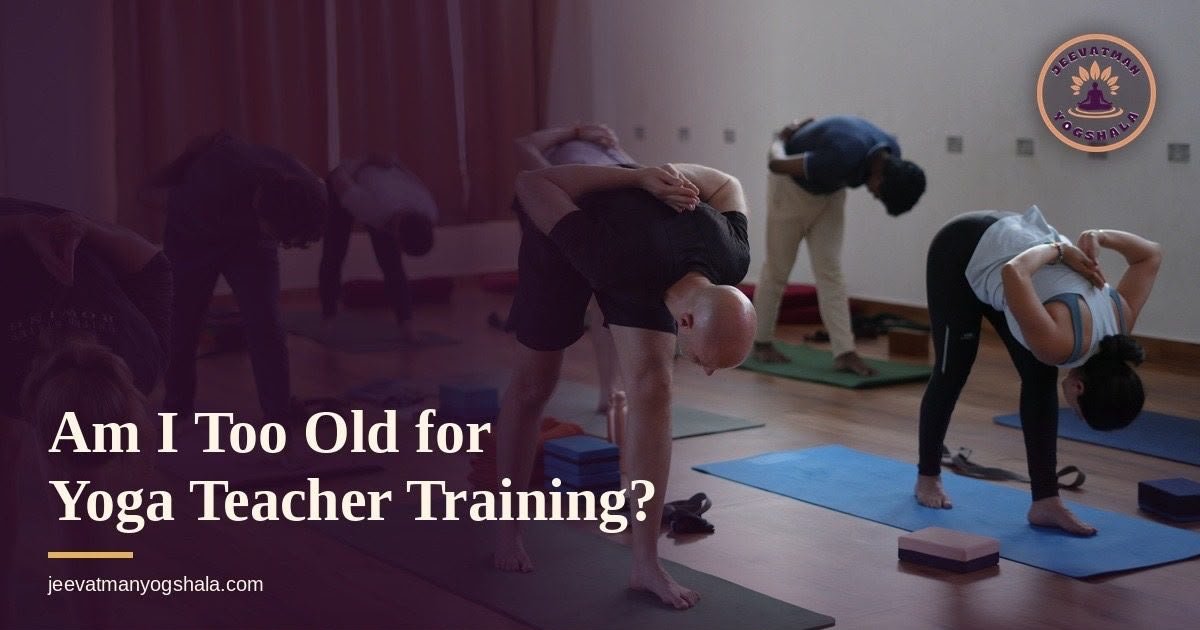
If you have found yourself asking whether you are too old for yoga teacher training, you are not alone. It is one of the most common worries people bring to us, whether they are 42 and thinking about a career change, or 58 and wondering if it is too late to deepen their practice. The short answer is that age by itself is rarely the deciding factor. What matters more is your health, your current practice, and how realistic you are about what the training involves.
Quick Answer: No single age makes yoga teacher training off-limits. Most schools do not set an upper age cap, and students in their 40s, 50s and 60s complete training every year. What matters is your physical readiness, any existing health conditions, and your willingness to pace yourself and modify where needed, not the number of years you have lived.
Is There an Age Limit for Yoga Teacher Training?
Most yoga teacher training schools do not set a maximum age. Entry requirements typically focus on things like a minimum age (usually 18), general health, and sometimes a baseline level of yoga experience, rather than an upper limit. That said, policies vary between schools, so it is worth asking directly rather than assuming.
What schools do care about is whether you can participate safely in the programme as it is structured. A 200-hour course involves several hours of physical practice a day, alongside study and practice teaching. That intensity is the real variable, not your birth year. Two 55-year-olds can have very different experiences of the same course depending on their fitness, prior practice and how they pace themselves. If you want to see what a foundational programme actually involves day to day, our 200-hour yoga teacher training page sets out the curriculum and schedule.
Requirements are also set by whichever credentialing body a school registers with. Yoga Alliance, for example, publishes its own RYT 200 training requirements, and age is not listed among them.
Key Takeaway: Age alone does not automatically prevent someone from training. It also does not automatically mean everyone of any age is equally suited to every programme. What matters is an honest look at your own health and readiness.
Yoga Teacher Training Over 40: Is It Too Late?
Forty is a common turning point for people considering yoga teacher training, often after years in a different career. It is not too late, but it helps to know what you are walking into.
Career change: Many students in their 40s are drawn to yoga after feeling unfulfilled in a different line of work. Training does not erase the time it takes to build a teaching practice, but it does give you the foundation to start.
Physical flexibility: You do not need to be as flexible as a dancer to join. What matters more is understanding your own body and working within it, which is often easier at 40 than it was at 20, simply because you know your limits better.
Learning ability: Anatomy, philosophy and teaching methodology are new to most students regardless of age. Adult learners often bring better study habits and focus than they had earlier in life.
Confidence: Standing in front of a group to teach is uncomfortable for almost everyone at first, whatever their age. Life experience can actually help here, since many 40-something students have already had practice speaking up in work or family settings.
Balancing responsibilities: Work, family and financial commitments are real constraints at this stage of life. Think honestly about how a few weeks away, or a part-time course, fits around them before you commit.
Previous yoga experience: Some schools prefer applicants to have a few months of regular practice first. If you are newer to yoga, it is worth building a consistent home or studio practice before you enrol in a 200-hour yoga teacher training course.
Yoga Teacher Training Over 50: Can You Still Become a Yoga Teacher?
Yes, becoming a yoga teacher at 50 or starting yoga teacher training after 50 is realistic for many people. What tends to shift at this stage is the reason for training, and it is worth being clear with yourself about which reason applies to you.
Some students in their 50s want a genuine career change, perhaps after retiring early from a demanding job. Others are not looking to teach professionally at all, and are drawn to the personal fulfilment of studying yoga philosophy, deepening their own practice, or eventually teaching in an informal setting such as a community class or among friends.
Physical considerations matter more at this stage, simply because the likelihood of a pre-existing joint issue, past injury or other condition tends to rise with age. This does not rule training out. It means you should choose a course with a curriculum that includes proper anatomy teaching and room for modification, and speak to the school in advance about what to expect from the daily schedule.
Learning and adapting is rarely the obstacle people expect it to be. Yoga philosophy, anatomy and teaching methodology are taught from the ground up in most 200-hour yoga teacher training courses, so no one arrives already knowing the material. What helps most is choosing a course structure, whether intensive or spread out over a longer period, that suits how you learn and recover.
Students in their 60s do also join yoga teacher training, and age on its own is not usually the deciding factor for them either. The same questions apply, and matter more: general health, any existing conditions, current activity levels, and realistic expectations about pace and recovery during an intensive course.
Practical Tip: Before enrolling, ask the school directly about their daily schedule, how much rest time is built in, and how they support students who need modifications. A school that answers this clearly and specifically is usually a good sign.
Considerations by Age Group
No age group is better suited to yoga teacher training than another. The considerations simply shift, so use this as a starting point for your own planning rather than a ranking.
| Age Range | Common Goals | Worth Asking Before You Join |
|---|---|---|
| Under 40 | Building a teaching career, deepening practice, exploring yoga as a path | Do I have enough prior practice? What does the school expect of beginners? |
| 40–49 | Career change, structured personal growth, balancing work and family | Can I realistically take the time away? How does the course fit my current commitments? |
| 50–59 | Personal fulfilment, second career, teaching community or family | What modifications does the school support? How intense is the daily schedule? |
| 60+ | Personal study, philosophy, lifelong practice, informal teaching | Have I discussed this with a doctor if I have health conditions? What pace suits me? |
How Flexible Do You Need to Be for Yoga Teacher Training?
This is one of the most common worries we hear, and it applies to students of every age, not just older ones. The truth is that flexibility is not a fixed entry requirement for yoga teacher training.
Teacher training is about learning how a pose works, how to teach it safely, and how to offer modifications, not about performing the most advanced version of every posture yourself. Flexibility naturally varies from person to person, regardless of age, and a good course teaches you to work with your own range of motion rather than push against it.
That does not mean physical readiness is irrelevant. You should be able to participate in a full day of practice, even if some postures need modification. If you are unsure where you stand, a few months of regular practice before you enrol, ideally with a teacher who can point out where you might need adjustments, is a sensible way to prepare.
Yoga Teacher Training Physical Fitness Requirements for Older Students
A typical training day includes several hours of asana practice, along with pranayama, meditation, classroom sessions and practical teaching. For older students, the main question is not whether you can do yoga, but whether you can sustain that pace across several weeks.
A few practical things to think through:
- Any existing injuries or joint conditions, and whether specific postures need to be avoided or modified
- How much recovery time you personally need between physically demanding sessions
- Whether you can communicate openly with teachers about your limits, rather than pushing through discomfort
- How well you currently sleep, manage fatigue and maintain energy across a full day
If you are already active, this is a useful moment to check your general activity levels against a recognised baseline, such as the CDC's physical activity guidance, before committing to an intensive training schedule.
Important: If you have a pre-existing medical condition, a significant injury, or any concern about undertaking intensive physical activity, speak with an appropriate healthcare professional before enrolling in a yoga teacher training programme. This applies at any age, but it is worth stating clearly here.
Yoga Teacher Training as a Career Change After 40
A career change into yoga teaching after 40 is one of the more common paths we see, and it comes with real advantages alongside the realistic caveats.
People who switch careers later in life often bring skills that translate directly into teaching: public speaking, project management, patience with beginners, or simply the discipline built over years in a demanding job. These are not skills a 22-year-old graduate necessarily has yet, and they can shape how you show up in a classroom.
What is worth being realistic about is the difference between completing a training course and building a sustainable teaching income. A certificate is the start of the path, not the end of it. Most new teachers, at any age, spend time building experience and a student base before teaching becomes a reliable source of income, if it becomes one at all. Treat the course as a foundation, not a guarantee of employment. Some students go on to build further on that foundation with a 300-hour yoga teacher training once they have some teaching experience behind them.
Training for Personal Fulfilment, Not Just a Career
Not every student over 40 or 50 is aiming for a second career. Many enrol for reasons that have nothing to do with employment:
- A deeper, more structured understanding of yoga than casual classes provide
- Time dedicated to their own practice, without distraction
- Studying yoga philosophy and meditation in real depth
- The discipline and structure of a focused training period
- Being able to teach informally, such as guiding family, friends or a small community group
If this describes you, it is worth saying so honestly when you speak with a school, since it can affect which course length and intensity suits you best. You may also find our page on the sound healing course in Rishikesh worth a look, since some students combine it with yoga study as part of a broader personal practice.
Yoga Teacher Training in Rishikesh for Older Students
Rishikesh draws students of every age for yoga teacher training, and age itself is not typically a barrier to joining a course here. That said, training abroad, in an intensive format, is worth planning for carefully if you are past your 40s or 50s.
Consider the course intensity and daily schedule, which is usually full from early morning practice through to evening sessions. Ask what accommodation and food are like, since comfort and rest matter more when you are also adjusting to a new routine and, often, a new climate. Factor in travel: long flights, time zone changes and adjusting to a different environment take more out of some people than others, regardless of age.
Most schools in Rishikesh, including ours, do not publish a strict upper age limit, but it is always worth confirming directly with the specific school and course you are considering, since requirements and daily structure can differ. If you already have a health condition or injury, mention it when you enquire, so the school can tell you honestly whether their programme and schedule would suit you.
If you are still deciding on course length, our 200-hour yoga teacher training page outlines what a foundational programme covers, while our 300-hour yoga teacher training and 500-hour yoga teacher training pages are worth a look if you are building toward a longer-term teaching path.
What to Consider Before You Join, Regardless of Age
A short honest checklist, useful at any age:
- Do I have a general baseline of health that allows daily physical activity?
- Have I spoken to a doctor if I have an existing condition or injury?
- Do I have some prior yoga practice, or a plan to build it before the course starts?
- Am I clear on why I want to train, whether for teaching, career change or personal growth?
- Have I asked the school directly about their schedule, modifications and support for older students?
- Am I realistic about what the certificate will and will not guarantee afterward?
Key Takeaway
Being 40, 50 or older does not, by itself, rule out yoga teacher training. What matters is your health, your honesty about your physical limits, and choosing a course that supports the pace you need. It is not suitable for absolutely everyone at every stage of life, but age alone is rarely the reason.
Frequently Asked Questions
Is there an age limit for yoga teacher training?
Most schools do not set an upper age limit, though requirements vary. It is best to confirm directly with the specific school and course you are considering.
Is 40 too old for yoga teacher training?
No. Many students begin training in their 40s, often as a career change or a deeper commitment to their personal practice. What matters more than age is general health and readiness for the course's pace.
Is 50 too old to become a yoga teacher?
No, 50 is not too old. Students in their 50s regularly complete yoga teacher training, whether to teach professionally, teach informally, or deepen their own understanding of yoga.
Can I become a yoga teacher after 50?
Yes. Completing a recognised course after 50 is realistic for many people. Building a teaching practice afterward takes time and effort, as it does at any age, so it helps to have realistic expectations about how quickly opportunities develop.
Can a 60-year-old do yoga teacher training?
Some do. As with any age, it comes down to individual health, existing practice and the ability to participate safely in the daily schedule. Speaking with a doctor beforehand, if you have any health concerns, is a sensible step.
Do you need to be flexible to become a yoga teacher?
Not in the way people often assume. Training focuses on understanding poses, teaching methodology and safe modification, not performing the most advanced version of every posture. Flexibility varies naturally between individuals, regardless of age.
Are there physical fitness requirements for older students?
There is no separate fitness test, but you should be able to participate in a full daily schedule of physical practice, study and practice teaching. If you have an existing injury or condition, discuss it with the school in advance and consult a healthcare professional if needed.
Is yoga teacher training a realistic career change after 40?
It can be, especially for people who bring transferable skills such as communication and discipline from an earlier career. It is realistic to treat the training as a starting foundation, not a guarantee of income or employment afterward.
What should older students consider before joining a course?
General health, any existing injuries or conditions, current yoga experience, and how well the course's intensity and schedule match your needs. Speaking directly with the school before enrolling is the most reliable way to know if a course is a good fit.
Considering Yoga Teacher Training, Whatever Your Age?
Get in touch and tell us where you are starting from. We can talk through our 200-hour programme, the daily schedule, and what to expect, so you can decide with clear information.
Explore 200-Hour Yoga Teacher Training