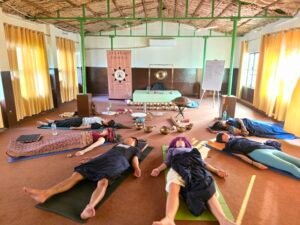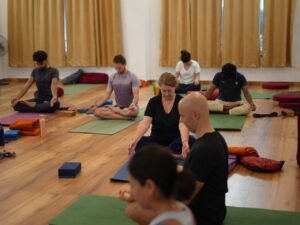

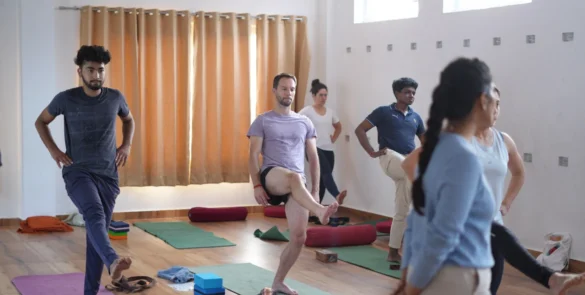
If you’re an international student thinking about becoming a yoga teacher, chances are you’ve already asked yourself one big question:
“Should I train in Europe, or should I go toconsider Yoga Teacher Training in India?”
This guide is written for exactly that moment — when curiosity turns into a serious decision. Not marketing talk. Not exaggerated promises. Just a clear, honest perspective to help you decide what actually makes sense for your long-term yoga journey.
Why International Students Choose India for Yoga Teacher Training
Europe lifestyle fatigue
Let’s be real for a moment.
Many European practitioners come to yoga because modern life feels overwhelming — constant schedules, screen time, pressure to perform, and very little space to slow down. While Europe has excellent yoga studios, the lifestyle itself often doesn’t allow you to fully disconnect.
This is exactly why yoga training in india for international students feels so different. Training in India gives you something different:
A pause from routine
A simpler daily rhythm
Space to focus only on practice, study, and self-reflection
For many international students, this change alone becomes deeply transformative.
Authentic lineage
Yoga didn’t start in a studio.
It didn’t begin as a workout.
In India, yoga is still taught as a complete system — physical practice, breathwork, philosophy, discipline, and lifestyle. When you learn here, you’re not just learning how to teach poses, but why yoga is practiced the way it is.
This authenticity is one of the biggest reasons international students choose India over Western training programs.
Depth of practice
In most European trainings, yoga fits into weekends or limited daily hours. In India, yoga becomes your entire day.
You practice, study, observe, reflect, and repeat — without distraction.
That depth creates confidence, not just certificates.
And confidence matters when you plan to teach globally.
This Depth of practice is also reflected in traditional postures such as Supta Vajrasana where correct alignment, breath awareness, and nervous system regulation are taught with patience and precision.
Can You Teach Yoga in Europe After Training in India?
This is probably the most important question — and the one most people are afraid to ask directly.
The short answer: Yes, you can, if your training meets international standards.
Let’s break it down properly.
Yoga Alliance Certification & Its Acceptance in Europe
Most international students choose programs that are Yoga Alliance certified, because this certification is widely recognized across Europe.
A Yoga Alliance–certified course in India:
Meets global training hour standards
Is accepted by studios, gyms, retreats, and insurance providers in many European countries
Allows you to register as a certified yoga teacher internationally
What matters is not where you trained, but how structured and recognized the training is.
Legal & Insurance Considerations in European Countries
Teaching regulations differ across Europe, but generally:
Studios look for recognized certification
Insurance providers require proof of training hours
Experience and teaching confidence matter more than location
Many teachers trained in India successfully teach in countries like Germany, France, the Netherlands, Spain, and the UK — both independently and through studios.
Yoga Teacher Training in India vs Europe: Key Differences
This is not about which one is “better.”
It’s about what suits your goal.
Depth of Training & Teaching Hours
Indian trainings often follow an immersive model:
Daily practice
Philosophy included
Teaching methodology emphasized
European trainings are usually modular and spread out.
Both work — but immersion builds faster confidence.
Cultural Immersion vs Studio-Based Learning
Training in Europe usually happens inside studios.
Training in India happens inside a yogic environment.
Ashram life, river rituals, silence periods, disciplined routines — these experiences shape how you understand yoga, not just how you teach it.
Long-Term Career Value
Many international teachers say the same thing later:
“Training in India gave me depth. Europe gave me structure.”
Together, they create balance — but depth always has to come first.
a complete overview of yoga teacher training options in Rishikesh
What International Students Should Know Before Coming to India
This is where doubts usually appear — and it’s normal.
Visa, Safety & Accommodation
Most yoga schools support international students with:
Clear visa guidance
Safe accommodation
Airport pickup options
On-ground assistance
India may feel unfamiliar at first, but well-established yoga towns like Rishikesh are already used to welcoming international students.
Language, Food & Daily Life in Rishikesh
English is widely spoken in yoga schools.
Food is usually adapted for international digestion.
Daily life is simple, calm, and focused.
Many students arrive nervous — and leave feeling surprisingly at home.
Who This Training Is For (and Who It’s Not)
This training is for you if:
You want to teach yoga professionally
You value depth over shortcuts
You’re open to discipline and self-work
You want an internationally recognized foundation
This training is not for you if:
You only want a quick certificate
You’re not ready for routine and structure
You’re looking for luxury instead of learning
Honesty here saves time — for everyone.
Career Opportunities After Completing Yoga Teacher Training in India
After completing a recognized training in India, many international students:
Teach in European studios
Start private classes
Lead retreats
Assist senior teachers
Combine yoga with wellness, therapy, or coaching
India gives you roots.
Europe gives you reach.
That combination works.
200-hour yoga teacher training program designed for international students
Why Many International Students Choose Jeevatman Yogshala
Students who choose Jeevatman Yogshala often say the same thing:
“It felt personal.”
The focus is not on crowd size, but on:
Traditional teaching
Individual attention
Balanced learning environment
Support beyond certification
For international students, this balance makes the transition into teaching smoother and more grounded.
FAQs – International Students Ask Us This All the Time
Can I legally teach yoga in Europe after training in India?
Yes, if your training is internationally recognized and meets required teaching hours.
Is Yoga Alliance certification from India valid internationally?
Yes. Yoga Alliance certification is accepted in many European countries.
Is it safe for European students to travel to India for yoga training?
Yes, especially in established yoga destinations like Rishikesh with experienced schools.
What is the difference between yoga training in Europe and India?
India focuses on immersion and tradition, while Europe focuses on modular learning and structure.
Do international students get teaching support after certification?
Many schools provide guidance, mentoring, and career direction even after course completion.
Final Thought
If you’re planning to teach yoga internationally after completing your training, choosing the right foundation matters more than anything else.
If you’d like guidance on selecting the right course pathway for your international teaching goals, our team is always happy to help.
Find Best Yoga Style for You Hatha Yoga vs Ashtanga Yoga