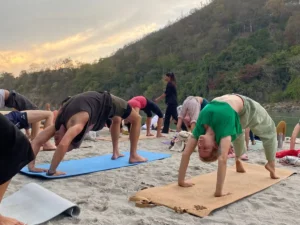

If you’re new to yoga or feeling stressed from long working hours, this beginner-friendly guide will help you start your practice with ease. We’ll cover simple poses, meditation tips, and a routine you can follow daily — even if you have a busy lifestyle.
Table of Contents
What is Yoga for Beginners?
Benefits of Starting Yoga
10+ Easy Yoga Poses (Step-by-Step)
Simple Meditation Tips for Stress Relief
Common Mistakes Beginners Should Avoid
7-Day Beginner Yoga Routine
FAQs
Conclusion (Start Your Yoga Journey)
What is Yoga for Beginners?
Yoga for beginners is all about gentle movements, slow breathing and building a connection between your body and mind. You don’t need flexibility, strength or prior experience. You just need patience and consistency.
If you want to deepen your journey, explore our
200 Hour Yoga Teacher Training in Rishikesh
Benefits of Starting Yoga
Reduces stress & anxiety
Improves flexibility and posture
Helps with back & neck pain (especially desk job)
Boosts energy
Improves sleep quality
Enhances focus & mental clarity
Basic Rules Before You Start Yoga
Practice on an empty stomach
Use a yoga mat, not a hard surface
Start slow — avoid pushing your body
Breathe normally throughout
End with Shavasana always
10+ Beginner Yoga Poses (Detailed Guide)
Tadasana (Mountain Pose)
Benefits: Improves posture, balance, and awareness.
How to Do:
Stand with feet hip-width apart
Relax shoulders
Keep spine straight
Inhale deeply, feel grounded
Beginner Tips:
Don’t tighten shoulders
Keep weight evenly on both feet
2. Marjariasana (Cat–Cow Pose)
Benefits: Best for spine flexibility, relieves back stiffness.
How to Do:
Come on hands and knees
Inhale → arch back down (Cow)
Exhale → arch back up (Cat)
Beginner Tips:
Move slowly with breath
Keep arms straight and stable
3. Balasana (Child’s Pose)
Benefits: Calms nervous system, relaxes lower back.
How to Do:
Sit on knees
Fold forward
Extend arms
Breathe deeply
Beginner Tips:
Open knees slightly for easier breathing
Place pillow under chest if tight
4. Adho Mukha Svanasana (Downward Dog)
Benefits: Strengthens arms, stretches hamstrings, energizes body.
How to Do:
Start in tabletop
Lift hips upward
Keep spine long
Press heels gently downward
Beginner Tips:
Bend knees slightly if legs are tight
Focus on straight spine, not straight legs
Bhujangasana (Cobra Pose)
Benefits: Opens chest, strengthens back — perfect for desk workers.
How to Do:
Lie on stomach
Place palms under shoulders
Lift chest slowly
Keep elbows slightly bent
Beginner Tips:
Don’t lift too high — focus on gentle opening
Setu Bandhasana (Bridge Pose)
Benefits: Strengthens glutes, relieves back tension, boosts blood flow.
How to Do:
Lie down
Bend knees
Lift hips while inhaling
Hold for 5 breaths
Beginner Tips:
Keep feet parallel
Don’t overarch lower back
Paschimottanasana (Seated Forward Bend)
Benefits: Stretches entire back body, improves digestion, relaxes mind.
How to Do:
Sit straight
Extend legs
Fold forward from hips
Hold ankles or toes
Beginner Tips:
Bend knees slightly if hamstrings are tight
Sukhasana (Easy Pose – Meditation Pose)
Benefits: Improves focus, calms mind, perfect for meditation.
How to Do:
Sit cross-legged
Keep spine straight
Hands on knees
Beginner Tips:
Sit on cushion if hips feel tight
Leg Raises (Beginner Version)
Benefits: Strengthens core, improves lower belly strength.
How to Do:
Lie flat
Lift legs to 45°
Hold 3–5 breaths
Beginner Tips:
Bend knees a little if difficult
Shavasana (Corpse Pose)
Benefits: Deep relaxation, releases body tension.
How to Do:
Lie on back
Hands open
Eyes closed
Natural breathing
Beginner Tips:
Don’t think of anything — just breathe
Supta Vajrasana (Supine Thunderbolt Pose)
Benefits:
Relieves lower back tension
Opens chest
Improves digestion
Reduces mental fatigue
How to Do:
Sit in Vajrasana
Lean back using elbows
Slowly lie down
Keep knees together
Breathe deeply
Beginner Tips:
Use pillow under back if needed
Come out very slowly
Meditation Tips for Stress Relief
Start with 5 minutes
Try box breathing (4–4–4–4)
Sit comfortably in Sukhasana
Observe breathing, don’t force thoughts away
- Try guided meditation if new
Want to learn meditation in-depth? Check our Yoga Retreat in Rishikesh.
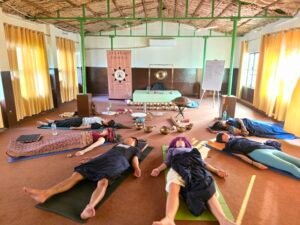
Additional Stress-Relief Option: Sound Healing (Natural Therapy for Deep Relaxation)
Apart from yoga and meditation, sound healing is becoming one of the most powerful stress-relief therapies.
It uses instruments like singing bowls, gongs, chimes and vibrations that help the mind reach a deep state of relaxation within minutes.
How Sound Healing Helps With Stress Relief:
Calms the nervous system instantly
Reduces anxiety, emotional tension & overthinking
Balances the body’s energy
Improves sleep & mental clarity
Helps release stuck emotions
Perfect for people who struggle with meditation
Why beginners love sound healing:
Even if someone finds it difficult to meditate or sit silently, sound vibrations do the work naturally.
You simply lie down and the sound frequencies relax your mind and body.
✔ If you’re exploring deeper healing options, you can also check our:
Sound Healing Training / Course — designed to help reduce stress, improve emotional balance and learn the art of healing through sound.
This becomes a beautiful combination with yoga for anyone who wants:
faster relaxation
deeper stress relief
emotional healing
spiritual growth
Common Mistakes Beginners Make
Holding breath
Rushing poses
Forcing flexibility
Skipping warm-up
Not relaxing after yoga
7-Day Beginner Yoga Routine (Easy & Realistic)
Day 1: Tadasana, Cat–Cow, Child’s Pose
Day 2: Cobra, Forward Bend
Day 3: Downward Dog + Meditation
Day 4: Bridge Pose, Leg Raises
Day 5: Gentle beginner flow (5 poses)
Day 6: Meditation + Breathing
Day 7: Full Rest + Stretch
FAQs
Q: Can beginners do yoga daily?
Yes, but keep sessions short (15–20 mins).
2. Is yoga good for stress?
Absolutely — deep breathing + stretching instantly reduce stress.
3. Do I need to be flexible to start?
Not at all. Flexibility comes after practice.
4. What time is best for yoga?
Morning or evening — whichever you can do consistently.
5. How long should beginners practice?
Start with 15–20 minutes daily.
Start Your Yoga Journey
Yoga is a powerful way to relax your mind, strengthen your body and bring peace into your daily life. Whether you’re dealing with desk-job stress or starting your wellness journey, these beginner-friendly poses will help you feel lighter and healthier.
If you want to go deeper, explore our Yoga Teacher Training & Retreat programs at Jeevatman Yogashala.