

A yoga class doesn’t begin with the first asana.
It begins the moment students walk into the room.
Before stretching, before alignment, before philosophy —
students are subconsciously asking only one question:
“Am I safe here to be myself?”
If the opening of your class answers this,
everything that follows flows naturally.
This guide is not about scripts or fancy words.
It’s about what actually works in real yoga classes —
for beginners, experienced students, and new teachers alike.
Why the First 5 Minutes of a Yoga Class Matter More Than You Think
When students arrive, they don’t come empty.
They bring:
stress from work
self-judgment about their body
comparison
expectations
sometimes anxiety or fatigue
The opening minutes of a class help their nervous system shift gears.
This is why experienced teachers focus less on impressing
and more on settling the space.
If the beginning feels rushed, forced, or heavy —
students carry that tension into the practice.
If the beginning feels calm, spacious, and human —
students soften on their own.
A Common Mistake: Talking Too Much at the Start
Many new teachers feel pressure to say something meaningful.
So they:
explain too much
add long philosophy talks
over-motivate
or speak continuously out of nervousness
The intention is good —
but the effect is often the opposite.
Most students don’t want a lecture when they first sit on the mat.
They want time to arrive.
Silence, when used consciously, often communicates more than words.
What NOT to Do at the Start of a Yoga Class
Let’s be honest — these are common mistakes, even among trained teachers:
Starting with a long speech every class
Reading from a script that feels disconnected
Forcing emotional themes
Telling students how they should feel
Turning the opening into therapy
Yoga is not about fixing people.
It’s about creating space so they can meet themselves.
Simple & Effective Ways to Open a Yoga Class (That Actually Work)
There is no one “right” way —
but there are ways that consistently create safety and trust.
1. Silence (Yes, Just Silence)
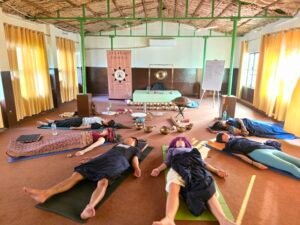
A minute or two of quiet sitting or lying down
allows students to land in their bodies.
No explanation needed.
No guidance required.
Just presence.
2. Gentle Awareness of Breath
A simple line is enough:
“Notice your breath, without changing it.”
This brings students inward
without pressure or expectation.
3. Small, Mindful Movement
Gentle neck rolls, seated movement, or simple stretches
help students release restlessness before stillness.
Movement first often makes stillness easier.
4. A Short, Grounded Intention
Not a speech — just one line.
For example:
“Today’s practice is about listening, not pushing.”
That’s enough.
Why Scripts Often Don’t Work (and What Works Better)
Many teachers search for opening scripts —
especially at the beginning of their teaching journey.
Scripts can help initially, but relying on them too long creates distance.
Students can feel when words are memorized
rather than felt.
What works better:
speaking from your own experience
keeping language simple
responding to the energy of the room
Authenticity builds trust faster than perfect wording.
Inclusive Language That Makes Students Feel Safe
Small language shifts create big changes.
Instead of authority-based cues, use choice-based language:
“I’m offering suggestions — you decide what feels right.”
“You can always rest.”
“There’s no perfect shape here.”
This:
reduces comparison
supports beginners
respects experienced students
creates trauma-aware space naturally
Inclusivity is not about saying more —
it’s about how you say less.
Beginner vs Experienced Students: One Opening Doesn’t Fit All
A beginner-heavy class often needs:
reassurance
permission to rest
simple explanations
A mixed or experienced class usually prefers:
less talking
more space
trust in their own practice
Good teachers learn to read the room
instead of repeating the same opening every time.
For beginners, a gentle and reassuring start—similar to a yoga for beginners practice—helps reduce fear and build confidence.
Teaching Yoga Philosophy Without Sounding Preachy
Yoga philosophy doesn’t need explanation —
it needs embodiment.
For example:
instead of explaining Sthira Sukham Asanam
guide students toward ease and stability through cues
When philosophy is felt, not explained,
students receive it naturally.
What Yoga Teacher Trainings Should Teach About Class Openings
A strong teacher training doesn’t just teach poses.
It teaches:
how to hold space
how to use silence
how language affects safety
how to guide without controlling
These subtle skills are what separate
a technically trained teacher
from a truly impactful one.
This depth comes from traditional understanding combined with real-world teaching experience.
Many students discover these skills during a 200 hour yoga teacher training, where teachers learn how to hold space, use silence, and guide students with awareness.
Final Thought: Doing Less Often Creates More
You don’t need to impress students.
You don’t need perfect words.
You don’t need to perform.
You need:
presence
awareness
honesty
When the opening of a yoga class feels human,
the practice unfolds naturally.
Why This Matters If You Want to Teach Yoga Seriously
Whether you are:
a new teacher
a practicing teacher
or training to become one
learning how to begin a class properly
builds confidence, trust, and long-term connection with students.
And that is what keeps students coming back.
The most respected yoga teachers are not the loudest ones.
They are the ones who know when to speak — and when to stay silent.
FAQs
What should a yoga teacher say at the beginning of a class?
A yoga teacher should keep the opening simple and grounding. A short welcome, a moment of silence, gentle breath awareness, or a calm intention is often enough. The goal is to help students arrive, not overwhelm them with long explanations.
A yoga teacher should keep the opening simple and grounding. A short welcome, a moment of silence, gentle breath awareness, or a calm intention is often enough. The goal is to help students arrive, not overwhelm them with long explanations.
Starting a yoga class without a script means responding to the energy of the room. Teachers can begin with silence, natural breath awareness, or a few honest words spoken from experience rather than memorized lines.
Why is the opening of a yoga class important?
The opening of a yoga class helps students settle their nervous system and feel safe in the space. A calm and inclusive beginning allows students to relax, focus, and connect more deeply with the practice.
The opening of a yoga class helps students settle their nervous system and feel safe in the space. A calm and inclusive beginning allows students to relax, focus, and connect more deeply with the practice.
Most effective yoga class openings last between one to five minutes. This is enough time to ground students without taking away from the physical practice or losing their attention.
Most effective yoga class openings last between one to five minutes. This is enough time to ground students without taking away from the physical practice or losing their attention.
The best opening meditation is usually very simple. Sitting quietly, noticing the breath, or feeling the body supported by the floor helps students arrive without pressure or expectation.
The best opening meditation is usually very simple. Sitting quietly, noticing the breath, or feeling the body supported by the floor helps students arrive without pressure or expectation.
Inclusive yoga classes begin with choice-based language. Teachers can remind students that rest is always allowed and that they are free to adjust the practice according to their own bodies.
What mistakes should yoga teachers avoid at the start of class?
Yoga teachers should avoid long speeches, forced emotional themes, rigid scripts, or telling students how they should feel. A calm, spacious beginning is usually more effective.